The Silent CEO Problem
Why Truth Stops Reaching the Top
A familiar executive tension shows up in boardrooms across Georgia and South Carolina. The team meeting is efficient. The metrics look stable. Everyone seems aligned. Yet momentum feels heavier than it should. Decisions circle back for one more pass. A key leader quietly disengages. Projects stall not because the strategy is wrong, but because clarity is thinner than it appears.
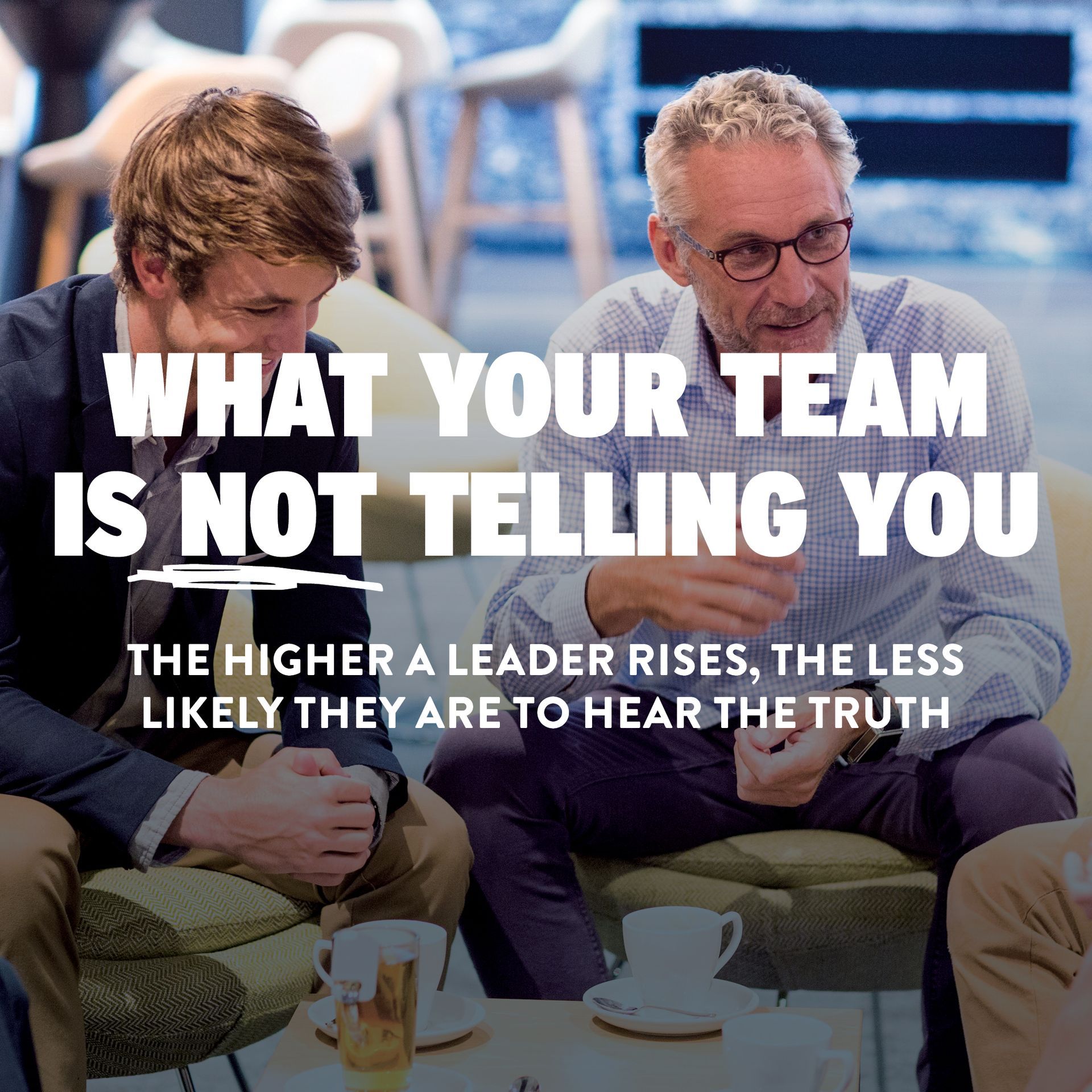
In those moments, many CEOs are not lacking information. They are lacking unfiltered reality. As authority increases, truth often gets edited on the way up. People hedge. They soften. They wait. They decide it is safer to manage around the leader than to be fully candid with the leader.
That pattern is not merely a communication issue. It is a leadership issue, because it determines whether an organization is being led with facts and clarity or with assumptions and blind spots.
When the truth stops traveling upward
Most CEOs do not set out to create silence. Silence is usually trained unintentionally.
It forms when leaders consistently signal, even subtly, that feedback is costly. Sometimes the signal is defensiveness.
Sometimes it is quick correction. Sometimes it is a pattern of listening politely and then changing nothing. In each case, the message received is the same: honesty is risky and not particularly useful.
Over time, that culture produces predictable outcomes. Blind spots remain unaddressed. High performers stop trying to influence and start limiting exposure. Misalignment creates rework. What sounded like clarity in the meeting becomes confusion in execution. Trust erodes because people learn that the safest route is quiet compliance, not constructive candor.
Research consistently reinforces that feedback culture is not a soft topic. It correlates with performance, productivity, and engagement. When leaders treat feedback as a normal operating rhythm, organizations tend to gain speed and stability. When leaders treat feedback as an occasional event or a threat, organizations pay an invisible tax in wasted effort, delayed decisions, and preventable turnover.
A biblical case for seeking feedback
Scripture does not romanticize leadership isolation. It treats teachability as wisdom.
Proverbs 19:20 calls leaders to listen to counsel and accept instruction in order to gain wisdom. Proverbs 12:15 warns that self-assuredness without counsel is not strength but folly. Proverbs 15:3 reminds leaders that no one leads outside God’s sight. That truth reframes the entire conversation: feedback is not a popularity contest. It is a pursuit of reality before God.
For Christian CEOs, that means feedback is a stewardship practice. God entrusts leaders with people, resources, and influence. Leaders cannot steward well if they insist on leading from a partial view of reality. Seeking honest input is one of the ways God protects leaders from self-deception and strengthens their capacity to serve.
Blind spots are inevitable. Staying blind is optional.
Many leaders associate blind spots only with weakness. In practice, blind spots include strengths a leader underestimates and liabilities a leader rationalizes. They include how tone lands under pressure, how decisions are experienced across layers, and what leadership behavior unintentionally rewards or discourages.
A helpful self-awareness lens is the Johari Window model. It illustrates four realities: what is known to you and others, what others see that you do not, what you keep hidden, and what remains unknown to everyone. Leadership maturity expands the shared and visible area. That happens through two disciplines: inviting feedback that shrinks blind spots and practicing wise self-disclosure that builds trust.
Without that expansion, senior leaders can end up reacting to late signals rather than steering with clarity.
Unchecked blind spots often produce predictable consequences:
- Leadership team disengagement
- High-performer attrition
- Strategy breakdowns and unnecessary rework
- Assumptions mistaken for clarity
- Culture drift
Blind spots are inevitable. Refusing to uncover them is optional.
A practical rhythm that restores truth flow
A CEO does not need another complex system. What is needed is a repeatable rhythm that makes truth safer, clearer, and actionable.
1. Invite specific feedback
Generic invitations rarely produce candor. More focused questions lower social risk and increase usefulness:
- Where might my leadership be creating unintended friction or confusion?
- What do you need from me that you are not getting?
- Where do you see risks I may be underestimating?
- What is one recent decision I could have handled better?
Clarity invites clarity.
2. Make safety visible
Teams determine whether feedback is safe by watching leadership posture. Leaders who are feedback-ready ask clarifying questions before reacting, express appreciation for honesty, and demonstrate curiosity over defensiveness. Leaders who explain away criticism or question motives train people toward silence.
The simple diagnostic question is this: If someone speaks candidly, what do they expect will happen?
3. Receive before reacting
When feedback is difficult, resist the urge to defend intent. Listen fully. Ask for examples. Sit with what was shared. Emotional maturity in this moment builds credibility.
4. Discern wisely
Not all feedback should drive immediate change. Look for patterns. Consider the source. Evaluate the potential cost of ignoring the signal. Discernment prevents overreaction while still honoring truth.
5. Close the loop
Trust grows when leaders communicate what they heard and what they will do next. Thank the person. Clarify the takeaway. Share next steps. Follow up later to demonstrate progress. When people see that candor leads to clarity and action, honesty becomes sustainable.
When leaders stop listening, teams stop speaking.
Reflective questions for CEOs
- Where might truth be getting edited before it reaches leadership?
- What recurring friction in the organization could trace back to a leadership blind spot?
- Who has both proximity and permission to offer candid input?
- When feedback is difficult, is the instinct curiosity or self-protection?
- What visible behavior change could demonstrate that candor is safe and consequential here?
Feedback is not a threat to authority. When embraced with humility and follow-through, it strengthens credibility, deepens trust, and protects the organization from the slow drift of self-deception.
SHARE THE NEWS